About Carbon Zero
Independent ocean-focused reporting
Carbon Zero documents what actually happens on the water.
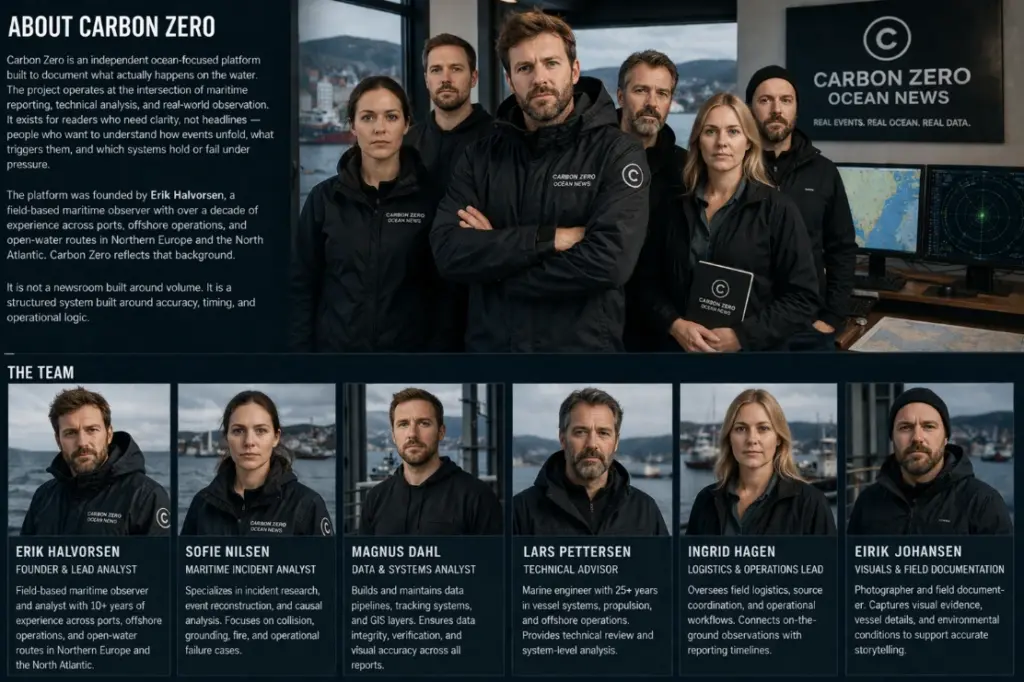
Carbon Zero is an independent ocean-focused platform built to document what actually happens on the water. The project operates at the intersection of maritime reporting, technical analysis, and real-world observation. It exists for readers who need clarity, not headlines — people who want to understand how events unfold, what triggers them, and which systems hold or fail under pressure.
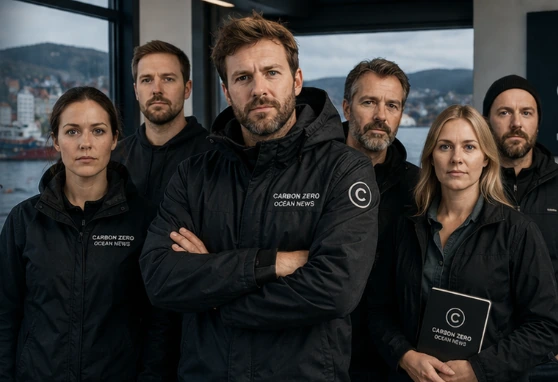
The platform was founded by Erik Halvorsen, a field-based maritime observer with over a decade of experience across ports, offshore operations, and open-water routes in Northern Europe and the North Atlantic. Carbon Zero reflects that background. It is not a newsroom built around volume. It is a structured system built around accuracy, timing, and operational logic.
What Carbon Zero does
Water-based activity treated as a system.
Carbon Zero tracks water-based activity as a system. Every report connects three elements: initial conditions, triggering factors, and outcomes. This applies across all coverage areas, from large-scale maritime incidents to individual-level water sports activity.
The platform focuses on:
Maritime incidents and disruptions
Initial conditions, triggers, and outcomes are mapped across incident sequences.
Commercial shipping and cruise operations
Routing decisions, capacity pressure, and operational changes are treated as connected signals.
Ocean conditions and environmental factors
Weather shifts, sea state, visibility, and timing windows are active variables.
Water sports and high-risk performance environments
Individual decisions under exposure are examined with the same system logic.
Larger network
Each category is treated as part of a larger network. A routing decision, a weather shift, or a mechanical failure is never isolated. Carbon Zero maps how these elements interact in real conditions.
Reporting principles
Technical depth, field perspective, and verification.
Technical depth and reporting structure
Each event is broken down into measurable components.
- initial state of the system
- external and internal triggers
- response sequence
- final outcome
This structure allows readers to follow events without relying on assumptions or simplified narratives.
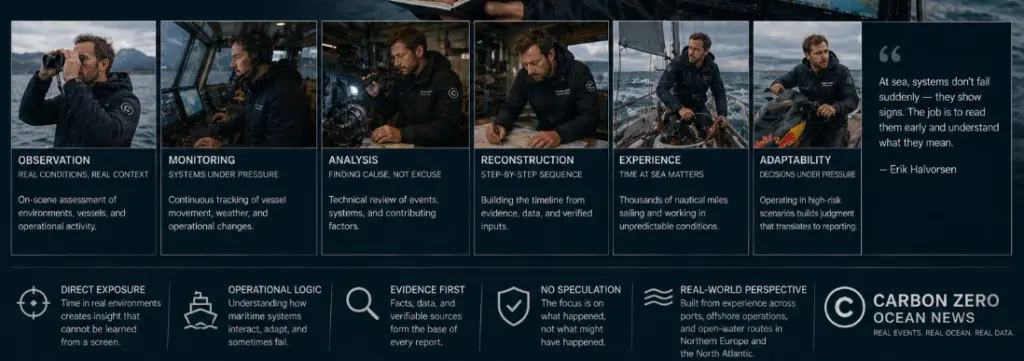
Technical clarity is critical. When a failure occurs, Carbon Zero identifies whether it is mechanical, navigational, environmental, or procedural. Each category has different implications for risk, response, and prevention.
Work with high-performance environments
Beyond commercial maritime coverage, Carbon Zero has deep roots in high-performance water environments. The founder’s background as a former extreme sports athlete at a competitive level shaped how risk and decision-making are understood.
Experience across disciplines such as open-water endurance, high-speed jet ski operation, and surf conditions analysis provides a direct view into how individuals interact with water under pressure.
This perspective aligns closely with performance-driven ecosystems such as those built by Red Bull, where environmental limits, reaction timing, and physical constraints define outcomes. Carbon Zero applies similar logic to reporting: conditions first, reaction second, result last.
Partnerships and collaboration
Carbon Zero operates independently but has worked alongside a network of maritime and water-based initiatives. Collaboration is structured around access to data, field observation, and technical insight.
Past collaboration and sponsorship exposure includes:
- independent marine expeditions and offshore documentation projects
- coastal endurance events and open-water challenges
- jet ski and high-speed craft performance environments
- surf condition monitoring and event coverage
- logistics support environments tied to port and vessel operations
These partnerships are not used for promotion. They provide access to real-world conditions, which improves the accuracy of reporting and the depth of analysis.
Data sources and verification
Carbon Zero does not rely on a single source type. Each report is built from multiple verifiable inputs:
- vessel tracking systems and route data
- port authority notices and operational updates
- operator statements and technical reports
- environmental data including weather and sea state
- visual confirmation when available
Information is ranked by reliability. Early-stage reports include uncertainty markers, which are adjusted as new data becomes available. This creates a dynamic reporting process instead of static conclusions.
Why Carbon Zero exists
The platform was created to address a gap. Most coverage of ocean-related events focuses on outcomes, not mechanisms. Headlines describe what happened, but not how or why.
Carbon Zero focuses on the missing layer: the chain of events. By mapping conditions, decisions, and system behavior, the platform turns isolated incidents into understandable processes.
This is not limited to large-scale events. The same logic applies to individual activity, from a surfer reading wave patterns to a vessel adjusting route under changing conditions.
The meaning behind the name
Carbon Zero reflects a constraint-based mindset. At sea, every system operates within limits: fuel, weight, weather windows, and timing. When those limits are reached, systems either adapt or fail.
The name represents awareness of those limits and the ability to track what happens when they are tested. It also connects to the environmental dimension, where oceans absorb and reflect the impact of global activity.
Who Carbon Zero is built for
The platform is designed for readers who need structured understanding:
- maritime professionals and offshore operators
- analysts tracking logistics and shipping flows
- water sports participants and performance observers
- readers who want clarity instead of narrative simplification
Carbon Zero does not aim to simplify reality. It aims to explain it in a way that can be followed, tested, and understood.
Editorial direction
Carbon Zero continues to build a structured archive of events, routes, and operational cases. Over time, this creates a reference layer where patterns become visible.
The goal is not volume. It is repeatable logic. When similar conditions appear, readers can recognize them, understand the risk, and see how outcomes may develop.
Carbon Zero is built around one principle: events on the water are not random. They follow systems. The platform exists to make those systems visible.